
“Not all of us can do great things, but we can all do small things with great love.” Mother Teresa
May 1943 – Chungkai Prison Camp – Thailand: Scottish Captain Ernest Gordon lay dying in the infamous Japanese prison camp in a Thailand jungle on the bank of the Kwai River. He had been placed with other fellow prisoners of war beside several corpses on the muddy floor of the hospital/morgue, known as the “Death House.”
Gordon had penned a final letter to his parents. He told them that he loved them. Then, after angrily cursing God and the Japanese, he lay waiting to die. Death would be a welcome escape from the hell of this miserable prison, which he had experienced since being captured 15 months earlier.
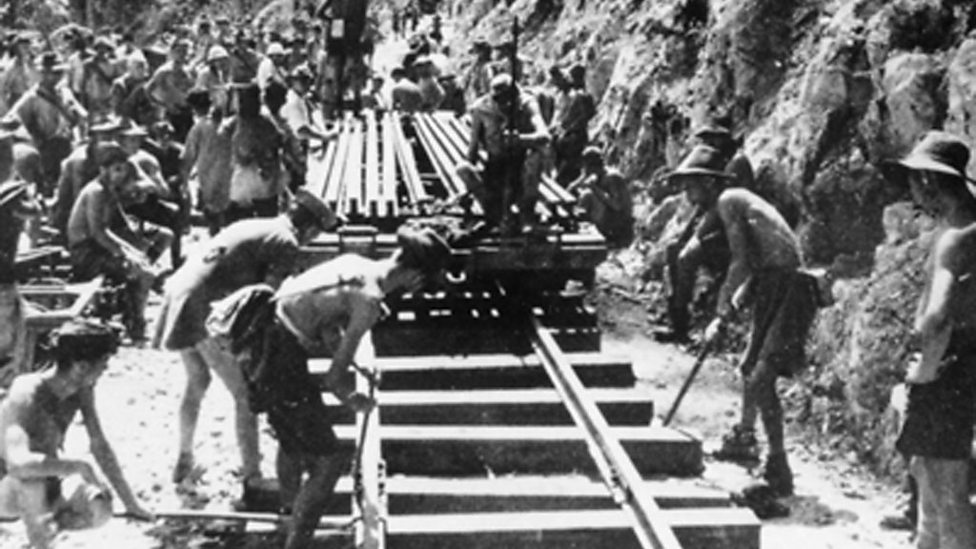
Ernest Gordon was born in Greenock, Scotland, in 1917. During World War II, he became a company commander with the 93rd Battalion of the Argyll and Sutherland Highlanders. In 1942, at the Battle of Singapore, the Japanese captured him. Gordon, along with other POWs, was marched into the jungles of Thailand and forced to build the notorious Burma/Thailand railroad.
On May 31, as Gordon lay at death’s door, two fellow POWs from Gordon’s unit brought their captain a rice ball trimmed with a banana in celebration of his 27th birthday. They were shocked by his condition. The next day, his friends, Dusty Miller and Dinty Moore, both Christians, arranged to get Gordon out of the hospital and carried him to a makeshift bamboo hut they had built.
After watching hundreds die from starvation, torture, and disease, Gordon had accepted his fate and wanted to be left alone to die. But each night, after being forced to work on the railroad from sunrise until dark, the two men shared their meager rations with Gordon. Miller patiently cleaned the infected boils on Gordon’s bony legs and back and picked the lice from his body.
Gordon struggled to understand why two starving men would willingly share their rations with a dying man. Despite their captain’s anger toward them, Miller and Moore came every night with food and tattered Bible pages, which they read to Gordon. Another POW gave a guard his watch in exchange for medicine for the Scottish captain.
Slowly, Gordon began to understand that these men had found the answer he needed. Their love freed him from a prison of hatred, hopelessness, and despair, and gave him new faith and a desire to live.
In the Chungkai camp, there was no church, no chaplain, and no religious services. Because of his leadership position and college degree, once Gordon’s condition improved, he was asked to lead a Bible study on the edge of the camp. It began with him sharing a single verse and his conversion story with a dozen POWs.
Over time, the meeting influenced hundreds of men in the camp. Men stopped stealing and fighting over rations and began sharing their food. Hatred of the Japanese guards gave way to forgiveness.
Ernest Gordon survived the war and returned to Scotland. He earned degrees at the University of London and Hartford Theological Seminary in Connecticut. In 1950, he was ordained by the Church of Scotland and came to Long Island, New York, to serve as a pastor in Amagansett and Montauk. In 1954, Gordon became the Presbyterian chaplain at Princeton University, where he served for 26 years until his retirement in 1981.
After retiring, Gordon moved to Washington, D.C. to be president of Christian Rescue Effort for the Emancipation of Dissidents, an organization that helped free prisoners from Eastern European countries. He chronicled his three-year POW experience in the powerful memoir Through the Valley of the Kwai.
An estimated 60,000 allied POWs and 240,000 Asian workers were forced to build the 250-mile-long “Death Railroad” from Thailand to Burma. Approximately 13,000 POWs and 80,000 civilians died from the brutal conditions and were buried along the railroad.
Dinty Moore died at the end of the war when his prisoner transport ship was torpedoed on the way back to Japan. Two weeks before the war ended, Dusty Miller escaped from Chungkai Prison but was captured and killed by the Japanese. They died without knowing the impact their love and kindness would have on Ernest Gordon. Their beloved captain died in 1992 at age 85.
“Dusty Miller and Dinty Moore saved my life and inspired my spiritual transformation,” said Gordon. “Their selfless care and unwavering faith in the face of brutal conditions at Chungkai changed the POW camp. Faith could not save us from the miserable prison camp, but it could take us through it.”
The men that helped Captain Gordon were very brave. Its terrible that all those forced to work on the railroad died or were murdered. I have’nt forgiven the Japs for what they did.